50 Years of Vietnamese Settlement Down Under: A Better Australia and Aspirational Democratic Vietnam
Tuong Quang Luu, AO & Sydney Nguyen
(Source: Commemorative Book to Mark 50 Years of Vietnamese Refugee Settlement in Australia – VCA-NSW 2025)
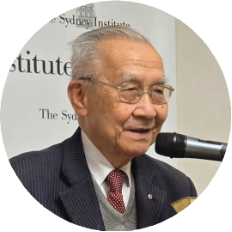
Good evening, Distinguished Guests, Ladies and Gentlemen,
Sydney Nguyen and I would like to warmly welcome you to this gathering at the Sydney Institute on a very windy, cold and rainy night. We would also like to thank most sincerely Dr Gerard Henderson, the Executive Director of the Sydney Institute and Mrs Anne Henderson, historian, writer and author, for this invaluable opportunity to talk about the Vietnamese settlement in Australia, 50 years after the Fall of Saigon.
The Vietnam War did not end on the 30th April 1975 – rather, it was replaced by a different kind of war: a war of revenge and persecution, a war of poverty.
If peace was indeed restored and reconciliation genuinely promoted, why then, did millions of Vietnamese – who were not, in historical terms, a migrant people – flee or tried to flee their country of birth.
Over the many centuries, Vietnamese people have moved from north to south as part of peaceful and sometimes non-peaceful territorial expansion. The earlier Vietnamese settlements in France and other French Territories were exceptions during those colonial times.
In a sense, the Vietnamese attachment to land was not dissimilar to the Australian indigenous peoples’ value of their environment.
Due to lack of prior collective overseas experience, and without proper preparation as political refugees from a communist regime, the first generation of Vietnamese in Australia, generally, had to overcome cultural shock before quickly realising their social position as a visible minority in Australia – which was still in its infancy as a multicultural society.
With those barriers to successful settlement in their new homeland, and the impact of traumatised sea and overland journey, personal tragedy, piracy and heavy loss of lives (estimated to have been between 3 to 5 hundred thousand, according to the United Nations High Commissioner for Refugees – the UNHCR), Vietnamese refugees as survivors were determined to become successful Australian settlers. They were poor in monetary terms, but rich and strong in resilience for personal achievement and collective aspiration for a better Australia and a democratised Vietnam.
I should hasten to add that Vietnamese refugees and migrants (i.e. family reunion through the UNHCR-initiated Orderly Departure Program, the ODP, to discourage people from risking their lives by sea) were neither better nor worse than other CALD communities. The differences though, existed in two ways: (a) the high intensity of personal trauma, in particular among the ex-servicemen and women of the Armed Forces of the Republic of Vietnam, and (b) the compact nature of the community. These factors make their successful settlement more noticeable.
A Brief Bilateral Relationship
Over a century ago, some Vietnamese came to this country literally by accident. A French ship carrying Vietnamese workers on its way to New Caledonia had to divert its destination to a port in North Queensland due to medical reasons.
For a long time, there was no official contact between Australia and Vietnam which was then part of the French Indochina, until a unified State of Vietnam gained independence within the French Union in 1949.
It might be useful to briefly record the official relationship between the two countries to provide a context for understanding Prime Minister Gough Whitlam’s policy and actions on Vietnam and the Vietnamese refugees in the 1960s and 1970s.
Australia officially recognised Vietnam on 8 February 1950 with Saigon as the Capital City, as recorded by an AAP dispatch from London, which was published by the Sydney Morning Herald on Thursday 9 February 1950.
In March 1952, Australia opened its diplomatic mission in Saigon with Mr John Rowland as Chargé d’affaires. The head of mission, Mr John Quinn took office in November of the same year with responsibility not only for Vietnam but also for the Kingdom of Cambodia and the Kingdom of Laos.
Vietnam was subsequently divided on a temporary basis under the Geneva Accords in 1954, but Australia continued to recognise solely South Vietnam known officially as the Republic of Vietnam. North Vietnam, which declared itself as the Democratic Republic of Vietnam in 1945, was not recognised by Australia and other nations of the Free World.
In the 1960s, Australia under the Coalition Governments supported South Vietnam against the war of aggression waged by the communist North which was heavily supported by Moscow, Beijing and the Warsaw Pact. Mr Gough Whitlam (1916-2014), then as Leader of the Australian Labor Party (ALP) in Opposition, was opposed to the Australian involvement.
In December 1972, the ALP won the election and Mr Gough Whitlam as Prime Minister recognised North Vietnam on 26 February 1973 (just a month after the Paris Agreement of 27 January 1973) while retaining Australia’s diplomatic relationship with South Vietnam.
A Compact Vietnamese community in early multicultural Australia
On 25 April 1975, the Australian Embassy in Saigon was closed down and under Mr Whitlam’s instruction, no persons who were deemed to be at risk for working with the ANZAC, could be allowed to join the evacuation out of the Capital City that was under threat of military occupation.
Mr Whitlam refused to accept Vietnamese refugees because of pressure from Hanoi and his own assessment of the changed power balance in the former Indochina. Domestically, he anticipated an electoral disadvantage for the ALP, as he called Vietnamese refugees “Asian Balts” i.e. potential voters for the conservative side in Australia. As it transpired, Mr Whitlam was totally wrong. Vietnamese Australians concentrate mainly in safe Labor Seats and become Labor voters.
Australia’s refugee policy changed drastically after the ‘Whitlam Dismissal’ in November 1975.
For domestic consideration and foreign affairs interest with the Asean member countries, Prime Minister Malcolm Fraser (1930-2015) mapped out a new strategy to deal with what was known as “the Boat People crisis”
The Vietnamese community, as permanent residents, did not exist in Australia before 1975. Since the late 1950s, under the Colombo Plan – of which South Vietnam was a member – Australia received the best and brightest young Vietnamese students for training at tertiary level as technocrats for the future development of Vietnam.
At Census 1976, there were 2 427 Vietnamese living in Australia. Five years later under the Fraser government, the figure was 49 616 persons according to Census 1981, an increase of 16 times.
In 1983, Mr Bob Hawke (1929-2019), as the ALP Prime Minister, largely followed the Coalition’s policy whereas in opposition, he had shared Mr Whitlam’s stand, which is well documented (See for example Hal G P Colebatch and others).
In the end with bi-partisan approach, and within two decades, the Vietnamese community grew to 150 941 persons (including 46 756 second generation Australian-born)) an increase of 62 times at Census 1996.
Vietnamese Australians, in the history of immigration to this country, appear to have become successful settlers within a short period, fully participating in the Australian life socially, culturally, economically and finally, in the political integration. Such a success may have changed Australia and strengthened the Australian multicultural society, according to a number of social commentators and main stream media.
Professor Geoffrey Blainey and his anti-Asian Immigration
In 1984 during the height of Fraser-Hawke policy of acceptance of Indochinese refugees and bi-partisan support for cultural diversity, a distinguished Australian historian, Professor Geoffrey Blainey (born in 1930 – ) set up a debate on Asian migration with his ‘Warnambool speech’. In the same year, he also published a book entitled ‘All for Australia’ in which he raised the risk for Australia by high Asian migration.
Australia’s racist past has been well documented. At the federation in 1901, the Australian Parliament passed legislation limiting Asian migration, in particular migration from China.
This ‘White Australia policy’ was gradually changed in the 1960s and finally abolished in early 1970s.
Fortunately, the Blainey debate did not adversely affect the Indochinese refugee programme, thanks to, in my view, the leadership of Prime Minister Malcolm Fraser and Prime Minister Bob Hawke, the Australian Civil Society and last but not least, Vietnamese Australians as a newly established and successful community. Otherwise, multicultural Australia may not have had a chance to reach maturity.
“Australia has now a bread queue on Sunday” Mr Stephen Dubois, federal MP for St George (1984-1993)
Professor Blainey did not agree with this charactisation, arguing that (in 1990s) “to describe Australia’s ethnic composition as multicultural, is not very helpful… is out of place.” To him, by and large, “Australia’s main institutions and its way of life are monocultural”. His only concession is in the field of food and cuisine. “Admittedly, the restaurant is truly multicultural, but that is only one facet of Australian life”, he told the audience at a conference organised by Monash ANZ Centre for International Briefing in February 1993 (page 1).

At the same gathering entitled “Australia and Britain: The Evolving Relationship”, I asserted that “in my view, the British heritage, as part of the Australian tradition, remains a golden thread in the fabric of our multicultural society” (page 61).
I believe Professor Blainey erred because his warning on Asian immigration and cultural diversity, was based on racist consideration. Today, history seems to repeat itself. His warning may have been in line with current anti-immigration in the global North against the uncontrolled movement of people from the global South. Whether race-based or economic or both, this policy may still be flawed from a humanitarian perspective.
After 50 years, the over 300 thousand-strong Vietnamese Australian community has also changed: it includes some 25 000 international students annually from the Socialist Republic of Vietnam with different background and aspiration. What has not changed are our tangible and intangible contributions to Australia.
Early in 1987, a perceptive politician, Mr Stephen Dubois MP for St George, told me “Australia has now a bread queue on Sunday”. That was well before the time of Banh Mi – the Saigonese baguette – becoming the Vietnamese street food sensation in Australia and the world.
I did not personally see the “rice queue “in the SRV, but I did witness the “bread queue” in communist Poland in mid-1980s. The difference between the two “bread queues” represents a small way Vietnamese Australians have changed affluent Australia.
There remains at least one of my concerns in terms of our aspirational democratised Vietnam. After 50 years, the CPV Secretary General, Mr To Lam still calls for reconciliation (hoa giai hoa hop). Is he serious? What did they do in the last half a century? And why does the SRV still pursue its attempt to control and divide the overseas Vietnamese communities through the Politburo Decision No. 36 and the SRV Government Decision No.1334?
And last but not least, please allow me as a Vietnamese Australian, to pay tribute to the 60,000 Diggers who served with distinction in South Vietnam and to express our debt of gratitude to the 524 Australians who valiantly sacrificed their lives for our freedom.
Thank you for your attention.
Tuong Quang Luu, AO Sydney 19 May 2025

Good evening everyone,
I’d like to begin by acknowledging the Traditional Custodians of the land on which we gather today — the Gadigal people of the Eora Nation — and pay my respects to Elders past and present. I extend that respect to any Aboriginal and Torres Strait Islander people joining us tonight.
Thank you to Gerard Henderson and The Sydney Institute for the opportunity to speak on this significant anniversary. And thank you, Mr Quang Luu, for sharing your story. It’s an honour to share this stage with someone whose journey represents the first wave of Vietnamese Australians. Your achievements and contributions have paved the way for generations like mine.
30 April 1975 was the end of the Vietnam War — but for the Vietnamese people, it was the beginning of a very long and painful chapter. My parents were born just before the war and grew up in the beautiful city of Huế, in central Vietnam. Hue is a place known for its beauty and imperial buildings, but it was also one of the cities that was heavily impacted during the war. They lived through the entire war and experienced the devastation it left behind. After the fall of Saigon, my parents described life as very poor and very bleak. They’ve described those years as some of the hardest — there were harsh restrictions, limited freedoms, no chance to finish their schooling, few ways to earn a living and when they did try to make extra money by selling food they would be punished and their things would be confiscated; they had to ration food, and lived in constant fear of surveillance or punishment under the new communist regime.
So in the late 1980s, about 12 years after the end of the Vietnam war, my parents made the decision to flee their homeland. So they were one of the later waves of boat people to escape Vietnam.
In the middle of the night, each carrying a small bag, they quietly said goodbye to their families and began their journey north. In my mum’s bag she some items of clothing, a rosary and a few family photos — she said it was something to remember home by, and something to keep her strong as she did not know where she was going and if she would ever return.
In a group of about 10 people, they paid a smuggler and trusted them with their lives to take them out of Vietnam safely. They travelled up north through the jungle and mountain ranges near the Vietnam–China border. Along the way in the jungle, their group was ambushed by bandits holding machetes wanting gold and money before they would let them go. Before leaving, my mother had sewn a small piece of gold into the lining of her bra, sensing something like this might happen. The bandits stripped and searched everyone got away with some money. Luckily, the gold wasn’t found. When my dad tells this story he said he didn’t care if they had taken all the gold and all our money just as long as the women were not harmed. And thankfully, no one was harmed.
Eventually, they made it to China, where they boarded a small wooden fishing boat—one never meant to brave the open waters of the South China Sea. They travelled along the coast stopping only when they desperately refill their food or water, always cautious to avoid the authorities or they would be killed or sent back to Vietnam where they would be punished or killed. The same smuggler that had taken them through the jungle was also the person that drove boat, spoke Chinese and he had connections on shore that helped them on land.
Out at sea it was a nightmare, the waves crashed against the boat relentlessly. Water spilled in constantly, and everyone took turns scooping it out as quickly as they could with buckets or bare hands. Many suffered from seasickness, vomiting over the sides. When storms happened, the boat was tossed around violently. People clung to each other, sobbing, certain that this was the end. My mum told me that she didn’t cry during those moments—though many around her did. Instead, she prayed with one hand holding the rosary – she left her fate into Gods hand because there was nothing more she could do in this moment. Even now, when my parents speak about the sea journey, they are in disbelief that they survived.
Somehow, they made it to Hong Kong in 1988. They spent the next two years in a detention camp, living and working, waiting for a country to accept them. Then, in 1990, while my mum was heavily pregnant with me, they received the news — they had been accepted for resettlement in Australia.
My parents arrived in this country in their late 30s — the age I am now — with no English, no qualifications, no money, and a newborn on its way. And again somehow, they found a way.
My dad took labouring jobs — anything that would support the family. Eventually, both my parents learned how to sew. And they never stopped. For as long as I can remember, they worked seven days a week from morning to night. I can still remember falling asleep to the sound of a sewing and hemming machine.
Despite their long hours, they were always there for me and my siblings. They did school drop-offs and pick-ups. They took us to extracurricular activities. We had weekly family movie nights. We never had much, but we never felt like we were missing anything.
As we were growing up my parents used to say they didn’t know how to repay Australia for the kindness of giving them a new home. But they were giving back — by working hard, by raising us kids, and being part of the Australian community. Collectively with so many other Vietnamese refugees, they opened small businesses, built strong communities, and brought life to suburbs like Cabramatta and Footscray — places where multiculturalism is now celebrated.
They raised us to value integrity, humility, and gratitude. Even my naming me Sydney was their way of saying thank you to the city and the country that took them in.
As a second-generation Vietnamese Australian, I grew up juggling two worlds — two cultures, two languages, and two different sets of expectations. At home, I was raised with traditional Vietnamese values: respect for elders, humility, putting family before myself, and never questioning authority. But outside, I lived in a very Westernised Australian society that celebrated being independent, self-expression, and personal choice. In school and with my friends, you were encouraged to speak up, be assertive, chase your dreams — even if they clashed with family expectations. I was expected to understand both and often had to be the bridge between my family and the outside world, whether I wanted to be or not. This wasn’t always easy. I was trying to be the ‘good Vietnamese daughter’ at home while learning to stand up for myself in a world that rewarded confidence and self-advocacy.
As I got older, I started to see how much of my parents’ unspoken trauma shaped the way they raised us. They had come from a place where safety was never guaranteed, so they tried to control what they could with me. They were cautious, always saving, always preparing for the worst. They were strict, pushed us hard with school and work because, to them, success was the only way to survive. Education meant stability and being safe. It meant we wouldn’t have to struggle the way they did.
Of course, that came with pressure. I grew up feeling anxious about failure, terrified of letting them down, ashamed even when I didn’t do well at school. But with time, I’ve come to understand that they were just doing the best they could — trying to give us everything they never had. They were figuring it out as they went, without the tools, the language, or the support to make sense of what they’d been through.
They went through so much so we wouldn’t have to. I’ve never had to fear for my life, or flee my home, or go hungry. I’ve had the privilege of growing up safe, with opportunities they never dreamed of. And now, I get to raise my children (I have two young daughters) in that same safety — with freedom, choice, and hope.
Watching my parents build their lives from nothing has taught me about resilience, about grit, and about gratitude. And for so many of us from my generation, we honour our parents’ sacrifices not just with our careers or achievements, but with how we live our lives, the values we teach our children and how we serve the community.
For me, honouring my parent’s sacrifice meant more than just working hard or getting a good job — it meant giving back to the community I grew up in. Throughout my life, I’ve volunteered where I could, and I was proud to be elected Vice President of Culture and Education for the Vietnamese Community – NSW Chapter – which is a migrant community organisation founded in 1978 which Mr Quang Luu was a founding member. The organisation was formed to help Vietnamese refugee settlement in Australia and advocate for their needs. During my term, I had the chance to learn more about our culture and history, and to create events and initiatives that helped preserve and celebrate it. I worked to get young people involved to help them reconnect with their roots and feel proud of where they come from.
In that role, to understand just how much pain the first generation still carries from the war and their journey here. It became clear that many are still working through it just like my parents. I also met and worked alongside so many second-generation Vietnamese Australians who felt the same way I did — proud of their background but still trying to make sense of it all. I realised that many in our community are still struggling to understand each other but are determined to work together to bridge that gap.
That experience inspired me. After our term ended, my husband and I, along with our friend and fellow committee member Tu Le, co-founded a social enterprise focused on empowering young people to create positive social change — especially in South West Sydney, where we all grew up. It’s a place that’s incredibly culturally diverse, and we wanted young people from the area to recognise that their upbringing— gives them a unique perspective and drive. We wanted them to know that they can channel that into anything they set their minds to. And if you’ve been given the chance to succeed, we believe you also have a responsibility to give back. For us, this work has been about more than serving the community — it’s been about honouring where we came from and helping others do the same.
It is in this spirit of community and remembrance that we honour 50 years since the fall of Saigon. We honour the lives lost in war and at sea and we remember those who fought and those who fled.
But this anniversary is also a celebration — of survival, of our resilience and of everything the Vietnamese people have built in Australia since. From the humblest beginnings, our community has grown into one that contributes in every field — in skilled trades, business, education, medicine, the arts, and public service. And we are still growing and will continue to give back.
Tonight, I stand here as the daughter of Vietnamese refugees — a proud Vietnamese Australian. I’ve come to see how powerful it is to carry two cultures, two languages, and two sets of values. What once felt like a tension has become a source of strength. It keeps me grounded and hopeful about where I’m headed.
And to Australia — thank you. Thank you for opening your arms. Thank you for believing in the resilience of refugees. Thank you for giving our families the chance to begin again with hope, dignity, and belonging. We will never forget.
Thank you.
Sydney Nguyen 19 May 2025
 Hội Ái Hữu Petrus Trương Vĩnh Ký Úc Châu