A Glimpse into the Political Integration of Vietnamese–Australians in Australia
Tuong Quang Luu, AO
(Source: Commemorative Book to Mark 50 Years of Vietnamese Refugee Settlement in Australia – VCA-NSW 2025)
In immigrant nations, political integration often begins in the final stages of the settlement process, with the actors rarely belonging to the first generation. The priority for immigrants, including Vietnamese refugees, is to stabilize their economic lives and improve their social well-being. The Vietnamese-Australian community is no exception. Due to a tradition of valuing education that existed even before they were forced to leave their homeland, many Vietnamese-Australian families are particularly concerned about the future of the younger generation, for whom education is a path to social advancement.
Due to the circumstances of war and the fluctuations of political parties in Vietnam, Vietnamese parents rarely encourage their children to be active in politics. It is perhaps for this reason that political integration within the Vietnamese community has not developed to its full potential, despite their large population, which ranks fifth among non-English speaking ethnic groups in a free, democratic, and multicultural Australia.
In mainstream society, politicians often begin their careers as councilors in local government. Australia has three levels of government: local, state, and federal. Local councils provide a practical training ground. In a party system, councilors can belong to the Labor Party, which leans center-left; the Liberal Party, which leans center-right; or the Greens, which is a third force with a progressive left-wing tendency, or they can be independent.
Their political leanings may have been evident very early on when they were active in student organizations like Young Labor or Young Liberal at Australian universities. Labor Party politicians also have the advantage of being trained within the union movement.
Many potential politicians also gain experience by working as assistants to state and federal Members of Parliament and Senators.
In Australia, the first person of Vietnamese descent to be elected as a local city councilor was Mr. Phuong Ngo in September 1987 for the Cabramatta Ward of Fairfield City Council (NSW). During his time as a councilor until May 1998, Phuong Ngo also served as the first deputy mayor from 1990-1991. Fairfield City, located in the Southwestern region of Sydney, is home to a large number of Vietnamese-Australian voters.
Phuong Ngo was born in Saigon in 1958 and escaped Vietnam 13 times after the fall of the Republic of Vietnam’s capital on April 30, 1975. He finally reached a refugee camp in Malaysia in 1981 and was resettled in Brisbane, the capital of Queensland, in 1982. He became a businessman and had political ambitions when he moved to Sydney.
Councilor Phuong Ngo became a political rival to Mr. John Newman, MP, an Australian of immigrant background who had been the Member for Cabramatta in the NSW Lower House since 1986. In the 1991 election, the two were opposing candidates in this electorate, but Phuong Ngo was unsuccessful. He later joined the Labor Party, the same party as John Newman, but belonged to a different faction. John Newman was considered to be from the party’s left wing, while Phuong Ngo was seen as being from the right wing.
MP John Newman was shot and killed on the night of September 5, 1994, and the killer has not been found to this day (2025). Initially, Phuong Ngo was not considered the main suspect. However, he was arrested on March 13, 1998. After several trials spanning three years, he was sentenced to life without parole on June 29, 2001. Because the verdict was considered to have some doubts, a legal review was convened on June 6, 2008, but the final result remained unchanged.
In Australia, the first citizen of Vietnamese descent to be elected to a state parliament was Mr. Sang Nguyen. In the 1996 election, Sang Nguyen was elected to the Victorian Upper House, representing the Western Metropolitan Region of Melbourne, an area with a large Vietnamese-Australian voter base. He held this position for 10 years until November 2006, when he was replaced by another Labor Party candidate.
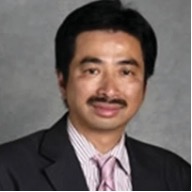
Sang Nguyen was also the first person of Vietnamese descent to be elected as a local city mayor in Australia. He was the second person to be elected as a city councilor, in Richmond, Victoria, in 1988. From 1991 to 1999, he served as the city’s mayor.
Sang Nguyen was born in Long Xuyen in 1960, in the Mekong Delta region. He escaped Vietnam for freedom in 1977 and settled in Australia in 1978.
Before entering politics, Sang Nguyen was active in and a member of a union movement called NUW (National Union of Workers). From 1993, he worked as an officer in the office of Dr. Gareth Evans, the then-Minister for Foreign Affairs in the federal Labor government.
Victoria is the state where Vietnamese-Australians have achieved the most success in political integration. The number of councilors and city mayors is higher there than anywhere else.
Specifically, the longest-serving councilor is probably Ms. Cuc Lam on the Maribyrnong City Council. She was once elected Deputy Mayor, and after 11 years, she twice held the important position of Mayor, in the terms 2017-2018 and 2023-2024.
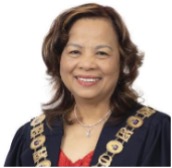
Mrs Cuc Lam
But the highlight of integration at the local government level was the 2020 election in Victoria, when three young Vietnamese-Australian candidates were elected and became mayors. Jasmine Nguyen became Mayor of Brimbank City Council at the age of 25. Anthony Tran was elected a councilor at 22 and became Mayor of Maribyrnong City Council. Claudia Nguyen served as deputy mayor from 2020-2021 and mayor from 2022-2023 for Yarra City Council. Before that, Daniel Nguyen was also elected Mayor of the same city for the 2017-2018 term. Ms. Thuy Dang (also known as Dang Tho) was also elected in 2020 to the Brimbank City Council. Having served as Deputy Mayor, Ms. Thuy Dang has the honor of being elected Mayor in the year the Vietnamese community celebrates 50 years of settlement in Australia (2025).
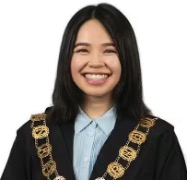


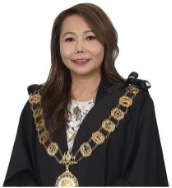
They ran as members of the Labor Party or as independents, but all are refugees or children of Vietnamese refugee families. Claudia Nguyen, Jasmin Nguyen, and Anthony Tran also have another thing in common—they participated in the Dual Identity Leadership Program (DILP). DILP was an initiative of the Vietnamese Community in Australia (VCA Victoria Chapter) in 2013 when Ms. Vivienne Nguyen was the president of the Executive Committee.
The Victorian state parliament also has two more members in the Upper House. One is Dr. Dung Kieu Tien, who was elected as a Labor Party member to the Victorian Upper House, representing the Southeastern metropolitan region of Melbourne for the 2018-2022 term.
Professor Dr. Dung Kieu Tien was born in Saigon in 1960. He escaped in 1979 and stayed temporarily in a refugee camp in Malaysia before being resettled in Brisbane at the end of that year. After graduating with a bachelor’s degree, he studied in the United Kingdom and earned a Ph.D. in Physics from the University of Edinburgh. He was a professor at Swinburne University of Technology, Melbourne.
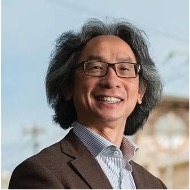
The current member in the Victorian Upper House is Mr. Trung Luu, the first Vietnamese-Australian politician from the Liberal Party, elected to represent the Western metropolitan region of Melbourne (2022-2026 term). This is also the first time that a Vietnamese-Australian politician has been appointed as a Shadow Minister, responsible for police, corrections, and crime prevention. He is also the Liberal Party’s spokesperson on multicultural affairs.
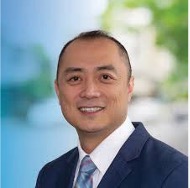
Trung Luu and his family escaped from Ca Mau when he was just five years old and settled in Australia in 1979. Before entering parliament, Trung Luu was elected as a councilor for the Brimbank City Council, Victoria, in 2020. He served in the police force for 28 years and was a member of the Australian Army Reserve for 19 years.
A young Vietnamese-Australian woman also served for a short period in the Victorian Upper House. Ms. Huong Truong was appointed by the Greens to be a Member of the Upper House from February 2018 to November of the same year to replace a retiring member. Unfortunately, Huong Truong was unsuccessful in the state parliamentary election at the end of 2018. Huong Truong was born in Australia in 1983 to parents who were both boat people and refugees from communism. Her father, Mr. Loi Truong Van, has been a Labor Party councilor on the Springvale City Council in the Eastern Melbourne region since 2008 until now (2025).
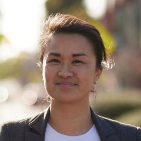
In Adelaide, South Australia, one person has made history. That is Mr. Tung Ngo. Tung Ngo was elected as a councilor for the City of Enfield, SA, in 1995 and held this position until 2014, when he was preselected by the Labor Party to be a candidate for the state Upper House. He was elected and re-elected multiple times and is still serving in 2025. Tung Ngo is considered to be connected to the FD union, the Shop, Distributive and Allied Employees’ Association. Tung Ngo and his sister stayed temporarily at the Palawan refugee camp in the Philippines and settled in Australia when he was 10 years old.
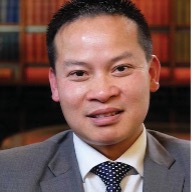
Western Australia also has a person of Vietnamese descent who served in the legislature but only for two years—the remainder of a predecessor politician’s state Upper House term. He is Mr. Ba Tong Pham, born in Ba Ria province in 1967. Unlike other Vietnamese-Australian politicians, he left the Republic of Vietnam very early as a child and settled in Perth, the state capital, in 1969. He joined the Labor Party in 1996. During his time as a member of the Upper House from November 2007 to May 2009, Ba Tong Pham had to be absent many times due to health reasons. In the 2009 election, he was not preselected due to internal divisions within the Labor Party. In Western Australia, Ms. Anh Truong Nguyet is the only person of Vietnamese descent to be elected as a councilor for the Wanneroo City Council, a suburban area of the Perth capital. Councilor Anh Truong served two terms from 2007 to 2015.
Finally, New South Wales (NSW), the largest state with the most Vietnamese settlers, is where the Vietnamese-Australian community has achieved four historical milestones in its political integration process.
First, it was the first time the Vietnamese community had a voice in the federal parliament in Canberra since May 2022. Second, the person who made this history was a Vietnamese-Australian woman. Third, it was the first time the New South Wales state parliament had a representative of Vietnamese descent since 2023. And fourth, these two politicians—Ms. Dai Le and Mr. Dung Vo Tri—are both Members of the Lower House. Under the parliamentary system in the United Kingdom, Canada, and Australia, the Lower House is where the government is formed, and running for the Lower House is often considered more difficult.
At the federal level, Fowler is an electorate in Southwestern Sydney, established in 1984, and was a very safe Labor Party seat until the 2022 election, when Ms. Dai Le (also known as Dai Le) ran as an independent candidate. Her opponent was Ms. Kristina Keneally, a former NSW Premier and a Labor Party Senator. Ms. Keneally was not a local resident, and the “parachuting” of this politician into Fowler was a political mistake, according to Prime Minister Anthony Albanese. As a result, Ms. Dai Le won and made history. In the May 2025 election, the Labor Party preselected a Vietnamese-Australian candidate, Ms. Tu Le Nguyen (also known as Tu Le), with the hope of reclaiming Fowler. But this effort also failed. MP Dai Le continues her second term (2025-2028) in the federal Lower House.
Ms. Dai Le was born in Saigon in 1968. As a teenager, she and her family settled in Southwestern Sydney in 1979 from a refugee camp in Hong Kong. Her professional career is as a journalist for the national public broadcaster, ABC Australia. In addition to her responsibilities as a federal MP, Dai Le is also a councilor for the Fairfield City Council NSW and the city’s Deputy Mayor. She is also a businesswoman and has previously run as a Liberal Party candidate in the Cabramatta state electorate (NSW).

Cabramatta was once a very safe Labor Party state electorate in NSW with a large Vietnamese-Australian population. This seat is no longer safe after candidate Dai Le reduced the Labor Party’s majority by more than 20% in 2008 and 2011.
In the 2023 NSW state election, Lawyer Dung Vo Tri was preselected as a Labor Party candidate and was successful, becoming the first Vietnamese-Australian Member of the Lower House in NSW.
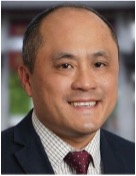
He settled in Australia in 1983 at the age of six in a family of former soldiers of the Republic of Vietnam. Lawyer Dung Vo Tri has been active in the community for many years as President of the Vietnamese Community in Australia (VCA) in both NSW and at the federal level.
(Source: Hansard Parliamentary Records, Sydney Morning Herald & The Melbourne Age, personal social media pages, and Wikipedia).
Tuong Quang Luu AO September 2025
 Hội Ái Hữu Petrus Trương Vĩnh Ký Úc Châu